
Running the same load through two or three cycles gets old fast. A dryer taking too long to dry is one of the most common laundry complaints, and it costs you time and money on your energy bill. The good news? Most of the time the cause is airflow, not a broken dryer, and you can fix it yourself.
Quick answer: clean the lint screen properly, then check the vent hose behind the dryer and the vent flap outside for lint buildup or kinks. If those are clear, make sure you’re not overloading the drum and that clothes are coming out of the washer properly spun.
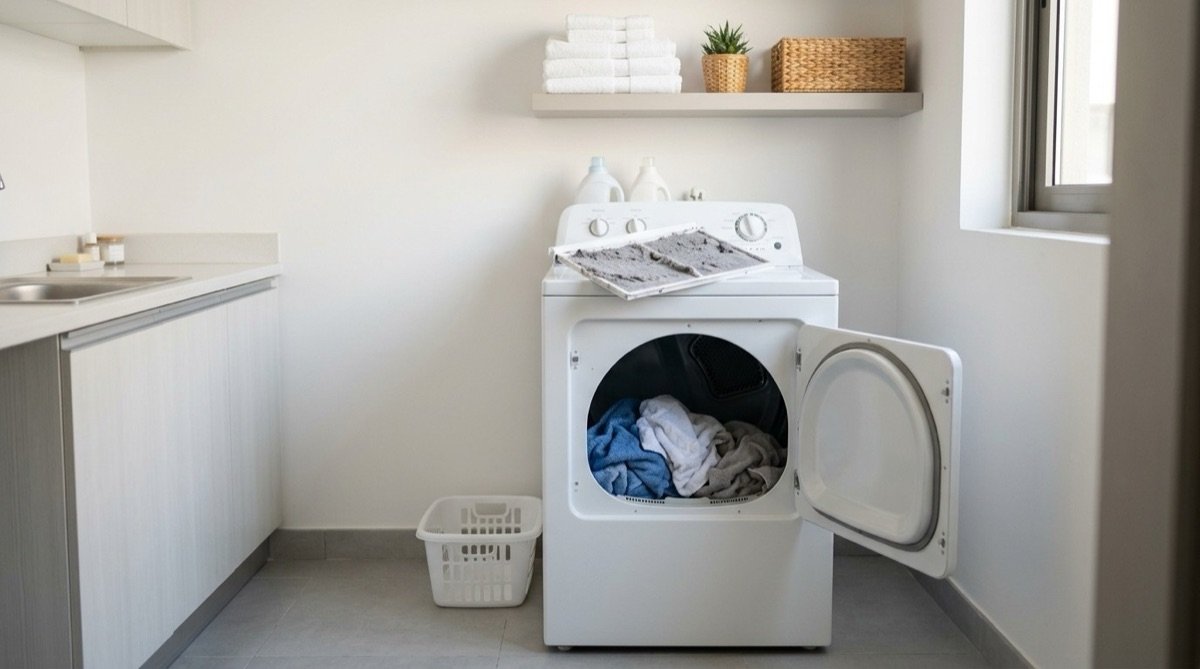
Safety first: lint is a fire risk
When a dryer takes too long to dry, it’s often because lint is blocking the airflow. Lint is very flammable, and blocked dryer vents are a known cause of house fires. So don’t ignore it, and don’t leave a dryer running while you’re out or asleep if it’s struggling.
- Unplug the dryer before moving it or working on the vent.
- For a gas dryer, be careful not to bend or strain the gas line when you pull it out.
- If the dryer feels unusually hot on the outside, or you smell burning, stop using it and get it checked.
1. Clean the lint screen (properly)
Pull out the lint screen and remove the lint before every single load. Then hold it under a tap: if water pools on top instead of running through, fabric softener or dryer sheet residue has clogged the mesh. Scrub it gently with warm, soapy water and a soft brush, let it dry, and put it back.
2. Clear the dryer vent hose
The most common reason for a dryer taking too long to dry is a lint-clogged vent. The flexible vent hose behind the dryer carries hot, damp air outside. Over time it fills with lint. Disconnect it (with the dryer unplugged), shake or vacuum out the lint, and look for tears. If you have a thin plastic or foil hose, consider replacing it with a semi-rigid metal duct, which traps less lint and is safer.
3. Check for a crushed or kinked vent
If the dryer is pushed tight against the wall, the hose behind it can get squashed flat, and hot air can’t escape. Pull the dryer a few inches away from the wall and straighten the hose. The shorter and straighter the vent run, the faster your clothes will dry.
💡 Tip: Go outside while the dryer is running and hold your hand near the vent cover. You should feel a strong flow of warm air. If it’s weak, the vent is blocked somewhere between the dryer and the outside wall.
4. Clean the outside vent flap
The vent cover on the outside wall has flaps that open when the dryer runs. Lint, leaves or even bird nests can jam them shut. Clear any debris and make sure the flaps open and close freely.
5. Don’t overload the drum
Clothes need room to tumble so warm air can reach every item. If the drum is packed full, the middle of the load stays damp. As a rule of thumb, fill the drum about halfway to two-thirds. Heavy items like towels and jeans dry better in their own load.
6. Make sure the washer is spinning properly
If clothes come out of the washer dripping wet, the dryer has far more water to remove. That’s a washer problem, not a dryer problem. See our guide on a washing machine not spinning if your loads are soaking wet.
7. Clean the moisture sensor
Many dryers have two metal strips inside the drum, usually near the lint screen. They sense how wet the clothes are and end automatic cycles when the load is dry. Residue from dryer sheets can coat them, so the dryer stops too early and leaves damp clothes. Wipe the strips with a cloth and a little rubbing alcohol.
8. Check the heat setting and cycle
Low-heat and delicate cycles are gentle, but slow. Make sure you’re using the right setting for the load. If the dryer tumbles but produces little or no heat on any setting, the heating element (electric dryers) or the igniter or gas valve (gas dryers) may be faulty. That usually needs a technician.
When to call a technician
- The dryer produces no heat, or very little, on every setting.
- It shuts off by itself mid-cycle.
- You smell burning or the outside of the dryer gets very hot.
- The vent is clear, the lint screen is clean, and you still have a dryer taking too long to dry.
If you’re replacing an old dryer anyway, an ENERGY STAR certified dryer uses less energy per load.
Dryer taking too long to dry: quick FAQ
Why is my dryer taking too long to dry after cleaning the lint screen?
The vent hose or outside vent is probably still blocked, or the lint screen is coated with fabric softener residue. Test the screen with water and check the vent airflow outside.
How long should a dryer take to dry a load?
A normal mixed load usually dries in under an hour on a regular cycle. Heavy towels can take longer, but needing two or three cycles points to a problem.
How often should I clean the dryer vent?
Clean the lint screen every load, and the vent hose and outside vent at least once a year, or more often if you do a lot of laundry.
Related guides: Washing Machine Not Spinning? Causes and Fixes · Washing Machine Not Draining?